For most consumers, AI’s first meaningful role in shopping hasn’t been autonomous purchasing or futuristic storefronts. It has been far simpler: shopping assistance.
People already use AI to shortlist products, compare options, summarize reviews, and answer practical questions before they buy. Retailers are responding by evolving their search and discovery experiences to behave more like AI assistants, directly inside the interfaces customers already use, as a way to reduce friction in discovery and retain control over how products are presented.
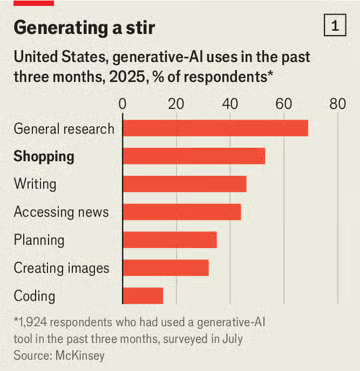
A study by McKinsey found that the second-most-common use in America for ChatGPT-like “generative” AI is for shopping advice, behind general research but ahead of writing assistance.
This behavior tells us something important. Shoppers don’t want to replace browsing. They want less work to get to the right set of options.
This first wave looks underwhelming for a reason. Established commerce interfaces don’t change easily, and early AI efforts had defaulted to the safest option: a chat window added to an existing experience. It was fast to ship and familiar to users, but limited by design.
But it also exposes a gap. Many shopping assistants talk about products without really interacting with the search experience itself. That gap is where quality starts to diverge. Shoppers want an integrated experience; whether they are searching for a product, content, support answer, or recommendation, they should be able to type naturally into the main input they already know—the search experience—and get the right result.
In fact, industry analysts forecast that enterprises will increasingly adopt agentic systems embedded directly into existing core user experiences, rather than relying on standalone AI interfaces.
A commerce agent is more than a chatbot
A chatbot answers questions. A commerce agent acts directly – doing the research, finding the best price, making the purchase, etc – on the search and discovery experience.
Most assistants today live in a separate panel. They respond to text, while the product grid, filters, and sorting operate independently. Users are left stitching the two together in their head.
In a better experience:
Asking a question immediately changes the results on screen
The assistant knows what filters are applied
The user never has to interrupt their browsing flow
If an assistant can’t change what happens in search and discovery, it’s limited.
Discovery doesn’t stop at the product page
Traditional commerce UX treats discovery as something that happens before the product detail page. Once a product is clicked, search steps aside.
That’s no longer how people shop.
Customers increasingly land directly on product detail pages, category pages, or content pages, and continue refining their decision from there. They ask follow-up questions, compare alternatives, and reconsider trade-offs in context.
Best-in-class commerce agents work inside search results, category pages, and PDPs, and extend discovery instead of forcing a restart.
The defining capability: conversation built into search
The clearest sign of a strong commerce agent is simple: what the user says affects what they see, and what they do affects what the agent says next.
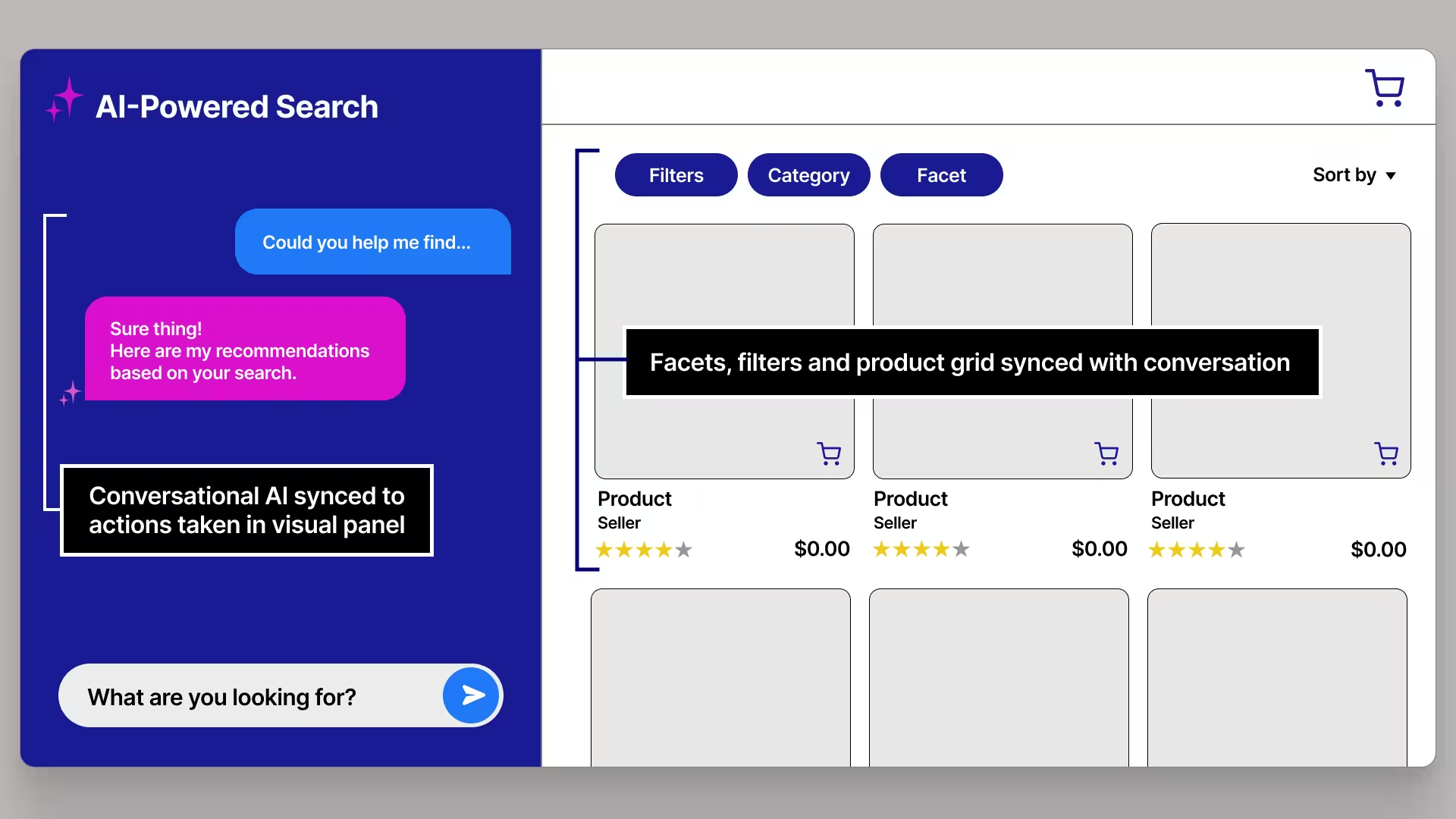
Conversation and interface stay in sync. In best-in-class experiences, this loop is anchored in the search experience itself, not a separate chatbot or side panel.
In its latest report, “GenAI Product Discovery Requires a New Digital Commerce UX”, Gartner essentially recommends that visual and conversational elements should influence each other. Changes made in a conversational context can update visual results. Similarly, actions like filtering and sorting (like in traditional search results or category pages) are understood by the conversational agent, which then pushes the conversation forward.
This is the difference between an assistant that talks about the experience and one that actively shapes it.
In practice:
A question updates the product grid
Applying a filter advances the conversation
Sorting results changes the agent’s next response
Nothing resets or loses context
This isn’t chat layered on top of search. It’s one discovery experience, expressed through search and conversation together.
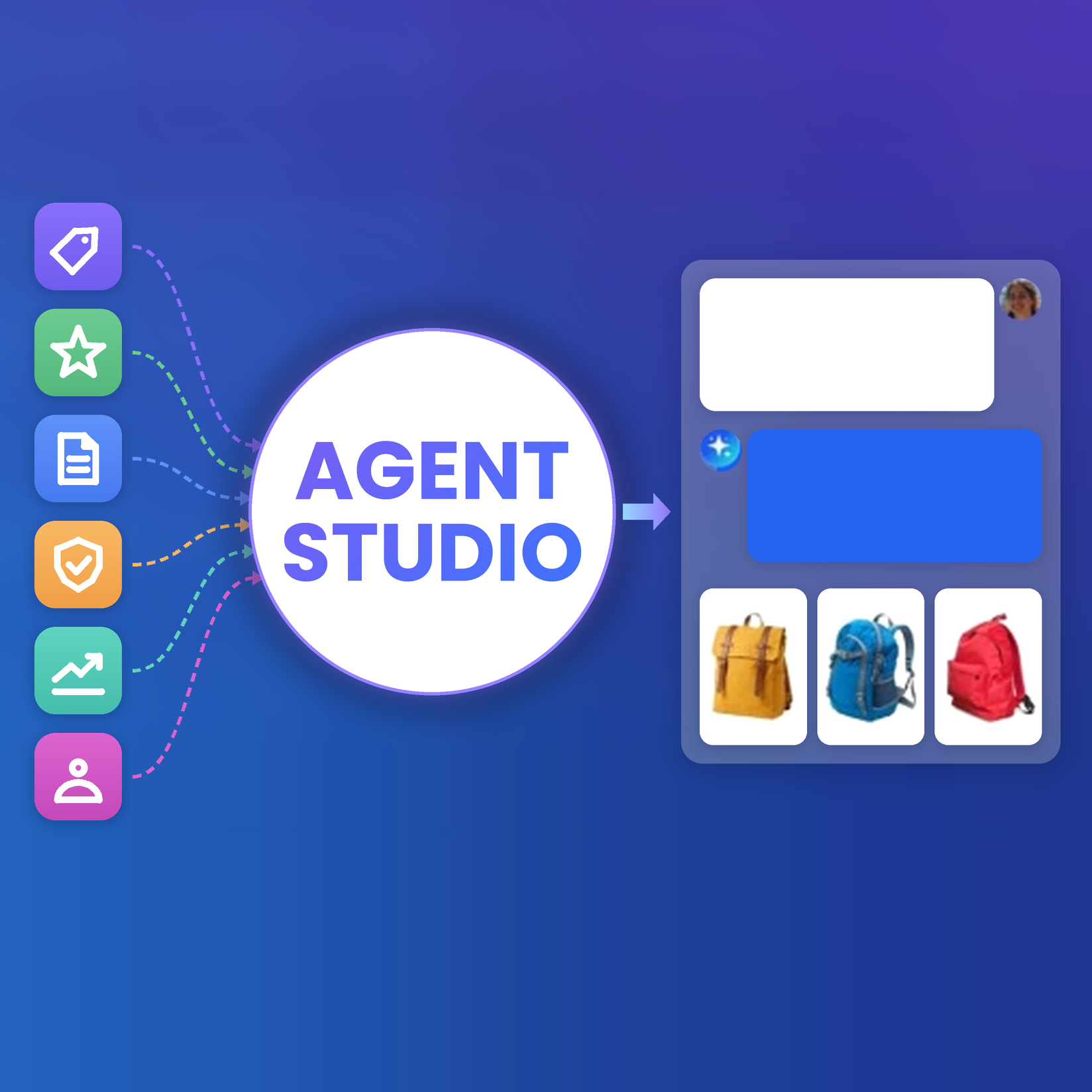
Instead of immediately adding a separate chatbot or AI button, Agent Studio evolves the existing search experience into a unified, agentic layer.
That means discovery remains synchronized across search results, category pages, and PDPs.
The experience feels continuous because it is. Nothing is stitched together after the fact.
The search bar continues to be the place where users ask questions, explore options, refine intent, and get answers, without switching interfaces.
Our bottom line/take
AI shopping assistants are already here. What separates the good ones from the forgettable ones is whether they can see and respond to what the shopper is actually doing.
Best-in-class commerce agents are embedded directly in the search bar, operate visually and conversationally in sync, and maintain context as shoppers explore and decide.
This is the experience standard we believe the industry is moving toward — and the one Algolia is building by making search itself agentic.


.webp)
















%20(2).svg)